Three Questions for Sarabeth Berman
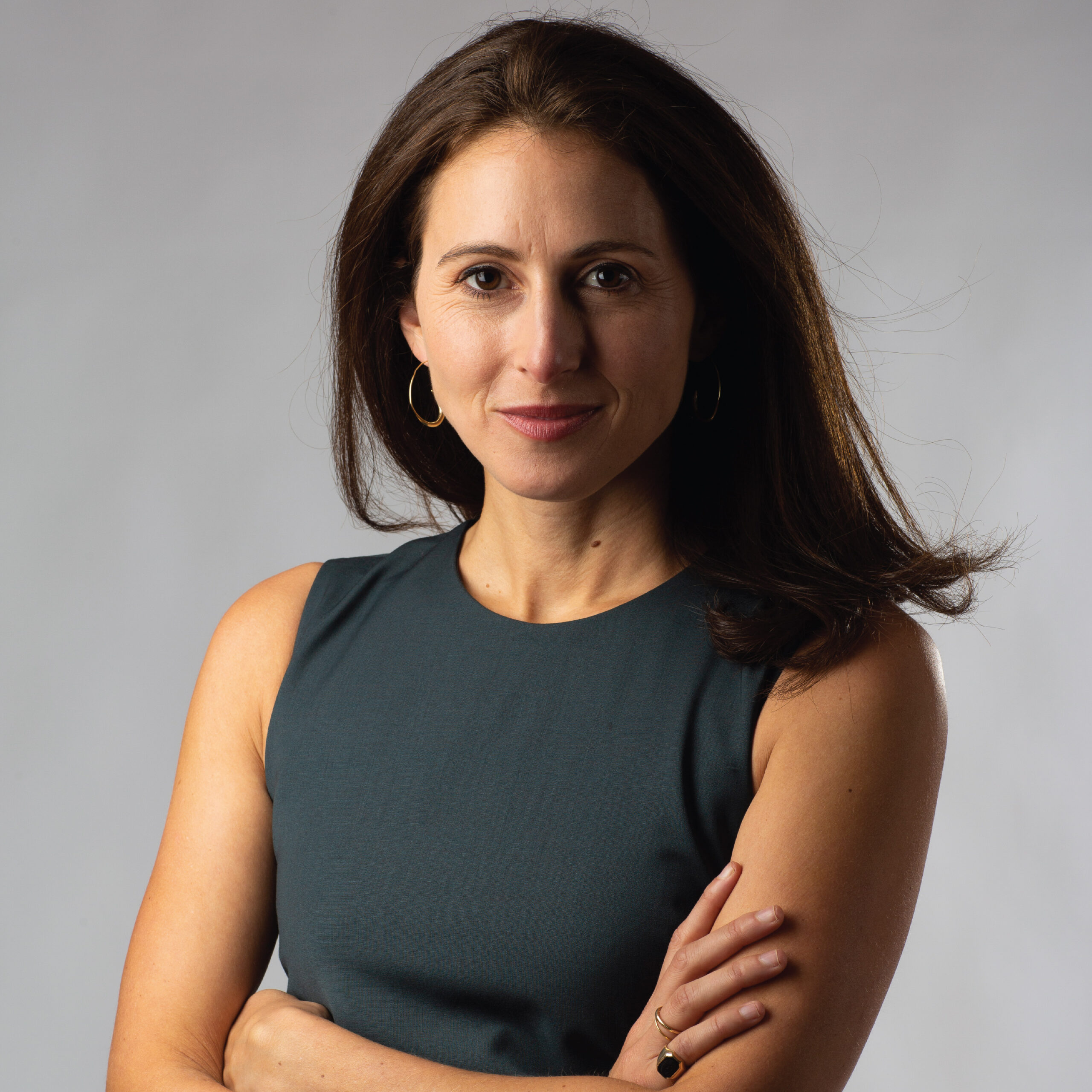
Across the country, local journalism is getting rebuilt from the ground up with new nonprofit business models and racking up Pulitzers along the way. Sarabeth Berman, CEO of the American Journalism Project, is leading one organization at the center of it all.
Be sure to sign up for our newsletter so you don’t miss our next interview.

When a community loses its local paper, what is the first thing that actually changes? What do people stop knowing?
Because we’re living in a moment where people feel bombarded with information, it’s unlikely that you find people who feel like they’re not getting information. What they’re not getting, though, is information about what’s happening in their neighborhood, in their backyard and in their community. When we lose local news, the data is very clear: people are less connected to their community. They’re less engaged, less likely to vote. Fewer people run for office. Fewer show up at public meetings.
There’s really interesting data that shows communities without local news are less likely to split their ticket and vote on the issues, and instead, shorthand to voting by the party. And then importantly, without local news, we see that government spending goes up and government accountability goes down.
Actually, another piece of research showed we’re spending $1.1 billion a year because governments in news deserts pay higher borrowing costs when they issue municipal bonds. Basically, investors raise the interest rate to account for the increased risk because the government is more poorly run.
And then there are lots of really concrete ways the lack of accountability plays out and costs taxpayers. We support the Salt Lake Tribune in Utah, and they did a story about how a county in Utah had a contract with a law firm that was about $100,000 more than it should have been. It was a simple story, but as soon as it was published, the law firm immediately reimbursed the county.
The American Journalism Project has invested in more than 50 local news organizations across the U.S. What separates the newsrooms that really take root from the ones that struggle?
We’ve come to believe that the crisis in local journalism is a market failure, and so we need to build new models for how we finance and sustain local news. The most promising new business models for local news are organized as nonprofits, regard themselves as public goods, and are inspiring individuals, philanthropy and corporations to support local news as a vital civic institution in their community.
Organizations that are thriving are the ones that are doing really excellent journalism that people value and are focused on making the case to their community that a thriving local news organization is important to a community.
Nonprofit newsrooms have won Pulitzer Prizes for four consecutive years, which is a remarkable streak. Do you think that’s a coincidence, or does the nonprofit model actually free journalists to do something differently?
As local newspapers have been in decline, they’ve had to cut back on their reporting resources. And these new nonprofit models are investing in reporting resources. Because they value mission over profit, they’re prioritizing journalism of great consequence, and that is leading to really outstanding recognition at the national level with Pulitzer Prizes.
I also think that nonprofits, in general, are more inclined toward collaboration, and many of the past four years of prizes have gone to collaborations between more than one newsroom. This year was a collaboration between the Connecticut Mirror and ProPublica, which reported on predatory towing practices in Connecticut.
People were getting their cars towed for relatively low-level infractions, like an outdated sticker, and then the towing companies were selling their cars within two weeks. This was having cascading economic implications on working families across Connecticut. It turned out that Connecticut had some of the strictest rules in the country, and lawmakers weren’t even aware of the problem. Once the story came out, lawmakers became aware and swiftly ushered in consumer protections.
Signal Ohio, one of the media outlets you fund, has newsrooms only in the big cities; however, we talk about the negative impact of news deserts in small communities as something nonprofit journalism could help solve. Can a small community, say 50,000 residents, actually support a newsroom through philanthropy, digital subscriptions and advertising?
Part of what we’re doing is investing in networked models, like Signal Ohio. Our hope is that off the back of the same business infrastructure, the same technology infrastructure, they can hire a journalist to work in and serve a small community. And that will be by getting the local community to help pay for it through reader revenue, philanthropy, and business and corporate sponsorship, and also by inspiring more regional capital to help offset the costs.
We’re also seeing ways in which AI can help lower the costs. Reporters still need to be out there building relationships, asking questions and uncovering information people are trying to keep from them, but AI can help sort through information, read transcripts from public meetings, etc.
How do local newsrooms you fund measure success? Historically, it was circulation and ad revenue. Now it’s probably to some degree clicks and views. Is it those metrics, Pulitzers or something else that you measure to know if a news outlet is working in a community?
Because we understand the problem to be a business problem or a market failure, our first measure of success is, can these organizations grow their revenue and become more sustainable? Are the organizations that we’re supporting growing? Are they diversifying their revenue? Are they able to hire more journalists?
Most importantly though, are our communities stronger? Do we see over time people being more engaged, government being more accountable, people being less polarized? This is harder to measure but is the reason why local news exists.
There’s an interesting study from The Lenfest Institute that looked at five new nonprofit news organizations and measured whether people are more engaged. Do they read the stories? Do they remember the stories? Are they more likely to vote? Do they feel more informed? He looked at all those metrics and found that, indeed, people who were engaged with these nonprofit news organizations did all of those things.
We’re living in a time when trust in the media is at a historic low. Is there a realistic path back to broad public trust?
Trust in media is at an all-time low. Trust in American institutions is at an all-time low. Trust in Congress as well. So, it is a real problem. However, local news is consistently rated as the most trusted information. People still trust local news, which leads me to believe that the path to rebuilding trust in shared information is to rebuild local news.
This interview has been edited for length and clarity.
About Sarabeth
Sarabeth Berman is the CEO of the American Journalism Project (AJP), a philanthropy rebuilding local news by funding and supporting the launch of nonprofit newsrooms and the growth of existing ones. AJP has raised more than $250 million to fund local journalism and today supports 50 nonprofit news organizations that serve 100 communities in the U.S.
Sarabeth joined AJP in 2020 and is a leader who’s creating solutions to the local news and journalism crisis in the country. Before AJP, she served as the global head of public affairs at Teach For All, a network of education enterprises, and spent seven years in China, where she helped build Teach For China and managed a contemporary dance company.